

Why Summer Vacations Do Not Always Mean Better Sleep
Vacation Doesn't Always Mean Better Sleep
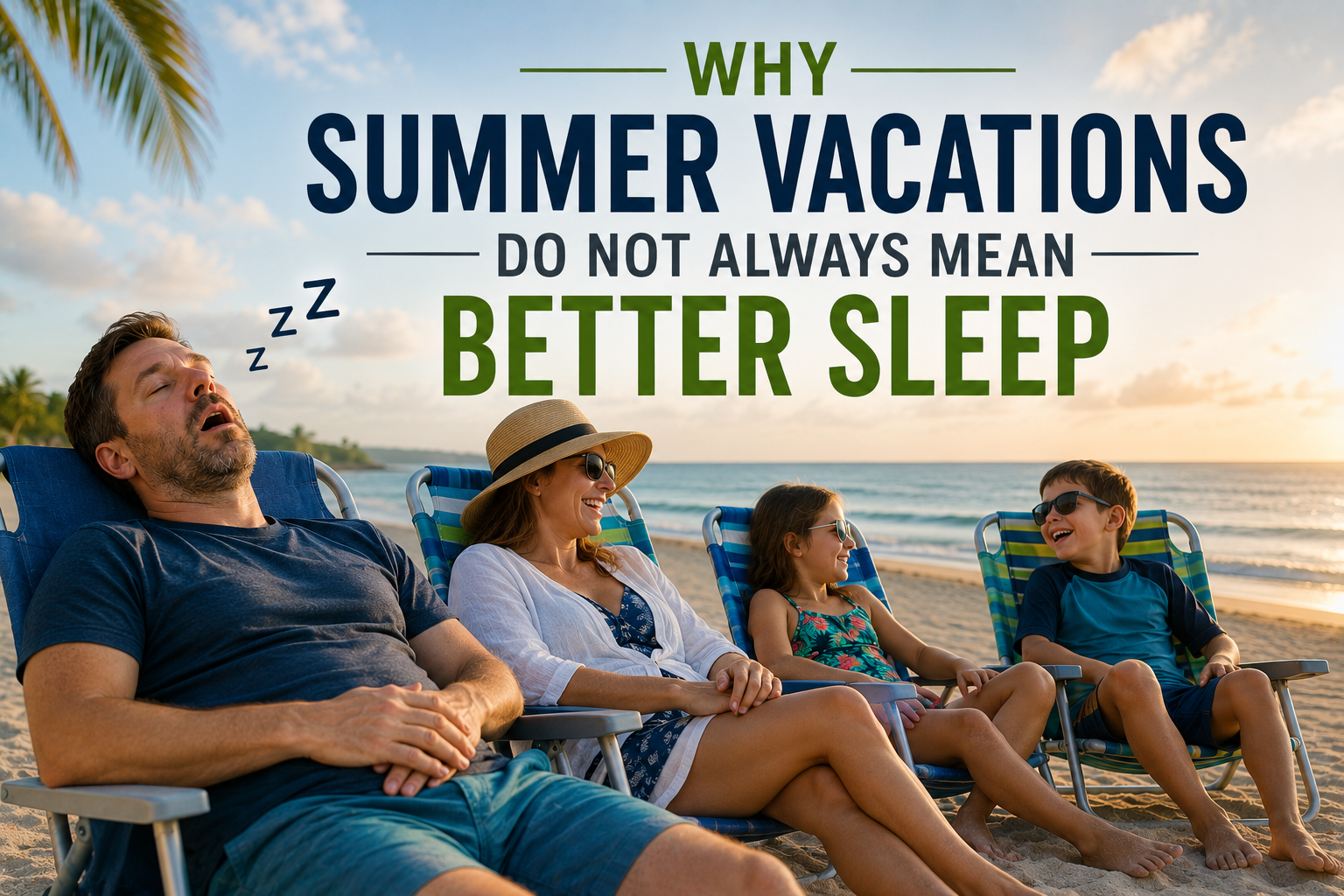
A week off should leave you rested, but many people return from vacation more tired than before. Here's why, and what sleep apnea has to do with it.
Summer vacation is supposed to be restorative. No alarm clocks, no deadlines, no commute. Just rest, family time, and a break from the routine that has been wearing you down all year. So why do so many people come home from vacation feeling just as tired, or even more exhausted, than when they left?
The answer is not always stress or overactivity. For a significant number of people, poor vacation sleep comes down to an underlying sleep issue that follows them wherever they go, including to the beach.
Disrupted Routines Work Against Your Sleep
Your body thrives on consistency. The same bedtime, the same wake time, the same sleep environment night after night, these are the conditions under which your circadian rhythm functions best. Vacation tends to disrupt all of them at once.
Staying up later than usual, sleeping in unfamiliar beds, changing time zones, and adjusting to new light exposure all send competing signals to your internal clock. Your body does not know whether to prepare for sleep or stay alert. The result is lighter, more fragmented sleep, even when you technically have more hours available.
For most healthy sleepers, the body adjusts within a day or two. But for people with an underlying sleep disorder, that adjustment period is harder, and the effects are more pronounced.
Alcohol and Late Nights Make It Worse
Vacation often comes with a different relationship to alcohol. A glass of wine at dinner becomes two. Happy hour starts earlier. It feels harmless, and for many people, it is. But alcohol has a direct impact on sleep quality that is worth understanding.
While alcohol can help you fall asleep faster, it significantly disrupts the second half of the night, reducing REM sleep and increasing arousals. For people with sleep apnea, the effect is compounded. Alcohol relaxes the muscles in the throat and airway, which makes airway collapse more likely and more frequent during the night. Studies have shown that even moderate alcohol consumption can worsen sleep apnea severity.
If you tend to drink more on vacation and wake up feeling unrefreshed despite getting eight hours in bed, the combination of alcohol and undiagnosed or undertreated sleep apnea may be what is happening.
Sleeping in a New Environment Reveals What You Normally Tune Out
There is a well-documented phenomenon called the first-night effect, where sleep quality drops in an unfamiliar environment because one hemisphere of the brain stays in a lighter, more vigilant state. Hotel rooms, vacation rentals, and guest bedrooms all trigger this response to varying degrees.
But there is another layer to this. Many people with sleep apnea have partners or family members who notice their snoring or breathing pauses more clearly in a quiet, unfamiliar setting. Vacation is often the first time a bed partner says something out loud about it. If someone close to you has mentioned that your breathing seemed unusual during a trip, that observation is worth taking seriously.
Coming Home Tired Is Not Normal
Most people assume that vacation fatigue is just a product of doing too much. And sometimes it is. But if you consistently return from time off feeling like you need a vacation from your vacation, that pattern is worth paying attention to.
Persistent tiredness that does not improve with rest, difficulty concentrating, waking up with a dry mouth or headache, and mood changes that seem disproportionate to how much you slept are all symptoms that point beyond lifestyle factors. They suggest that the sleep itself may not be restoring the body the way it should.
Sleep-disordered breathing is one of the most common and most underdiagnosed contributors to this kind of fatigue. It affects people of all ages and body types, and it does not take a vacation when you do.
There Is a Comfortable Path Forward
If any of this sounds familiar, the good news is that sleep-disordered breathing is very treatable. Dental sleep medicine offers options that do not require a machine and are easy to travel with, which means better sleep whether you are at home or away.
The first step is understanding what is actually happening during your sleep. Schedule a consultation today and find out whether a sleep breathing disorder could be behind the fatigue that has been following you on and off the road.