

The Sound Asleep People Don't Talk About: When Snoring Means More Than a Bad Night
When Snoring Means More: Signs of Sleep Apnea
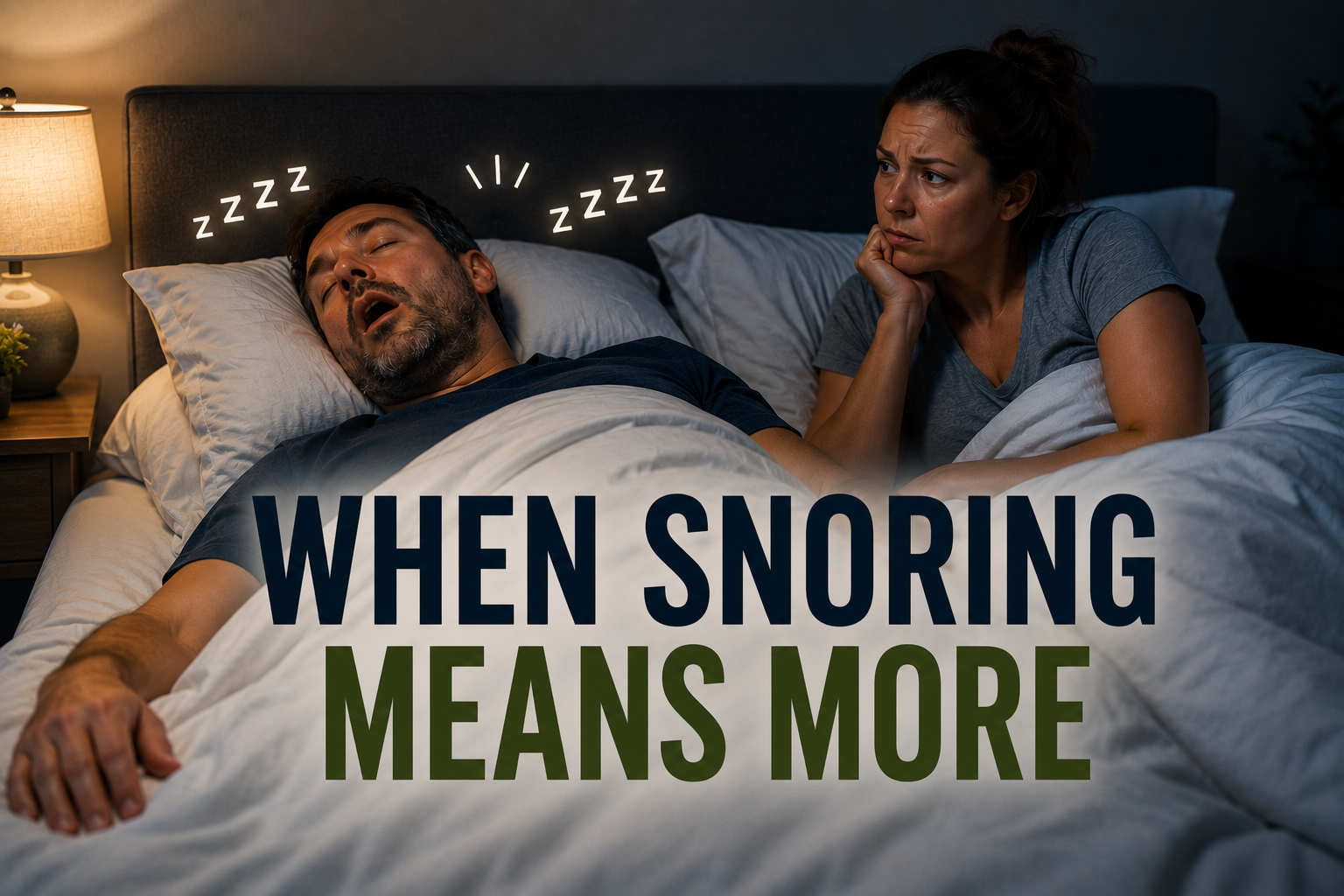
Every household seems to have its own snoring folklore. The uncle who could be heard through two walls at the family cabin. The partner who gets nudged awake three times a night. It's become one of those things people laugh off, tease each other about, or solve with earplugs instead of a doctor's visit. But somewhere between "harmless quirk" and "health concern," there's a line, and most people have no idea where it is.
It's Not About Volume, It's About Pattern
Here's the thing that surprises a lot of patients: snoring itself isn't really the problem. A stuffy nose, a few drinks, sleeping flat on your back, these can all cause snoring that means nothing beyond a rough night. What matters is what's happening underneath the noise.
In obstructive sleep apnea, the throat muscles relax to the point where the airway partially or completely collapses during sleep. Snoring is often just the sound of air squeezing past a narrowing passage. When that passage closes off entirely, breathing stops. The body senses it, jolts itself awake just enough to reopen the airway, and the cycle starts over. This can repeat dozens of times an hour without the person ever realizing they woke up at all.
So the real question isn't "how loud is the snoring?" It's "what else is going on while it's happening?"
What a Partner Might Notice Before You Do
Because sleep apnea happens while someone is unconscious, the earliest clues often come from whoever shares the bed (or the wall). Gasping, snorting, or choking sounds after a stretch of silence are a classic tell. So is restlessness, tossing and turning as the body struggles to get enough air.
For the person actually doing the snoring, the signs show up after waking: a dry mouth, a sore throat for no clear reason, a headache that wasn't there the night before. Add in the daytime side effects, feeling foggy, short-tempered, or wiped out by mid-afternoon despite a full eight hours, and ae pattern starts to form.
Why This Isn't Something to Shrug Off
Left untreated, sleep apnea doesn't stay contained to nighttime. Over time it's been connected to higher blood pressure, greater risk of heart disease and stroke, and metabolic issues like type 2 diabetes. It can chip away at memory and focus in ways that are easy to blame on stress, work, or getting older.
That's the frustrating part: many of the downstream effects of sleep apnea get treated as separate problems, when the actual root cause was never addressed in the first place.
The Fix Is Usually Simpler Than People Expect
A sleep study, often doable from home now, is typically the first step toward an answer. From there, treatment can range from adjusting sleep position to CPAP therapy to a custom-fit oral appliance, essentially a mouthguard designed to keep the airway open through the night.
None of this requires jumping to conclusions the first time someone snores after a big dinner. But if the snoring is a nightly fixture, especially one paired with gasping, morning headaches, or daytime exhaustion, it's worth treating as more than background noise.