

Why Kids Can Have Sleep Apnea Too (And What Parents Often Miss
Why Kids Can Have Sleep Apnea Too (And What Parents Often Miss)
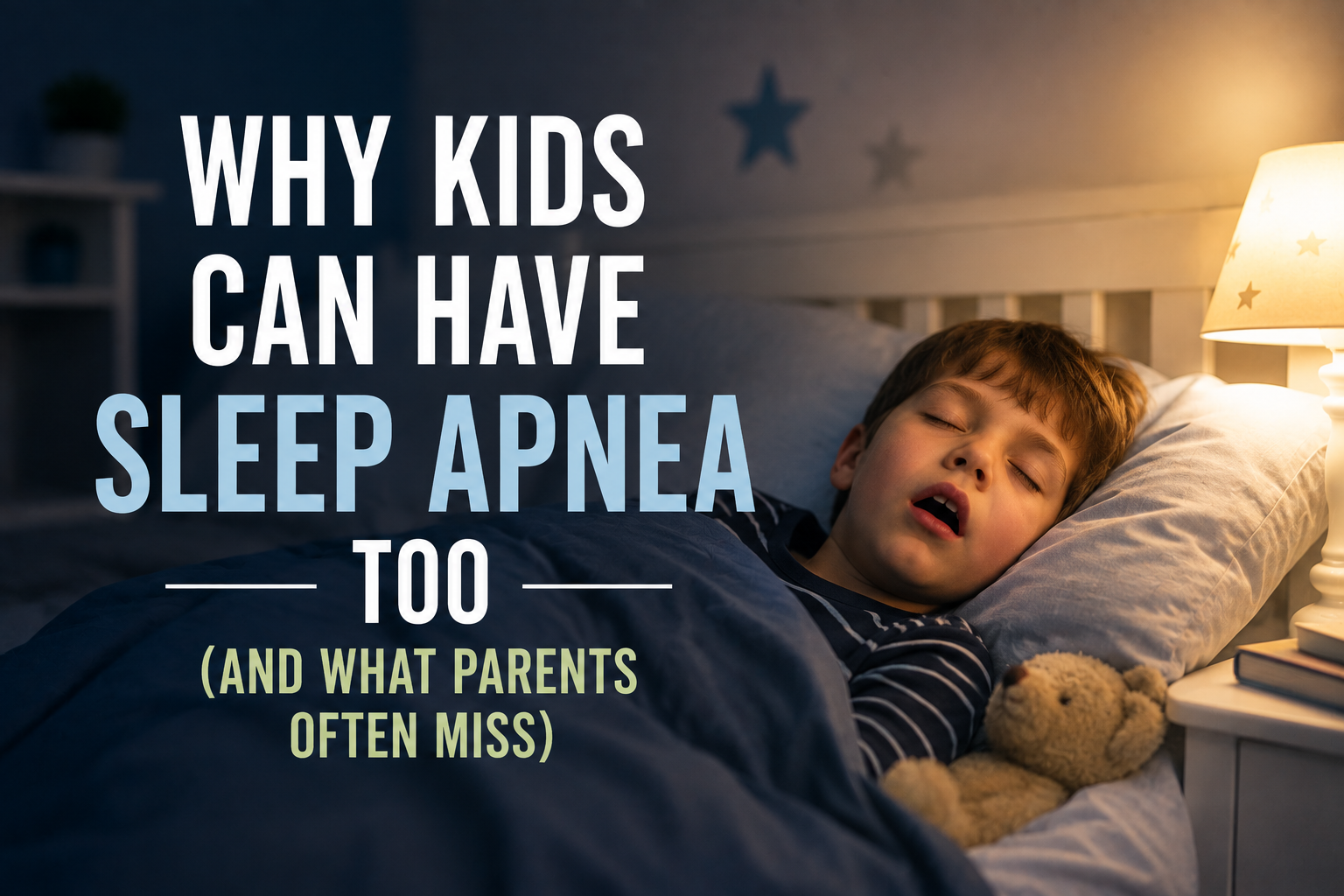
Learn why kids can have sleep apnea too, the signs parents often miss, and when snoring, mouth breathing, or behavior changes may warrant a sleep evaluation.
Ask most people to picture someone with sleep apnea, and they'll describe an adult, usually someone snoring loudly enough to be a family joke. A child rarely comes to mind. But pediatric sleep apnea is more common than most parents realize, and it often hides in plain sight because it doesn't look the way adult sleep apnea does.
The Symptom Swap That Throws Parents Off
In adults, disrupted sleep usually shows up as fatigue. In kids, it frequently shows up as the opposite. A child running on poor-quality sleep doesn't necessarily slow down, they often speed up: fidgety, impulsive, quick to melt down, hard to redirect. It's a pattern that looks a lot like ADHD, which means a sleep issue can end up getting treated as a behavior issue for months or years without anyone connecting the dots.
Signs Parents Can Watch For
Regular, loud snoring is one of the more obvious clues, but plenty of others are easy to miss. Mouth breathing during the day or overnight is common, as is restless sleep, frequent waking, or an unusual sleep position, like a neck tipped back to keep the airway more open. Bedwetting that continues past the age it's typically expected to resolve is another signal parents don't always connect to sleep. During the day, watch for trouble focusing at school, unexplained irritability, or growth that seems slower than expected for their age, since so much physical development depends on quality sleep.
None of these signs confirm anything on their own. But when a few show up together, it's worth mentioning at the next pediatric or dental visit rather than waiting to see if things improve.
Why the Timing Matters
Sleep does a lot of quiet, essential work during childhood: supporting brain development, consolidating memory, regulating mood, and fueling physical growth. When apnea keeps interrupting that process, kids may be missing out on the deep sleep stages where most of that development actually happens.
There's also a practical reason to catch it early. Pediatric sleep apnea is often tied to enlarged tonsils or adenoids, or to how the jaw and airway are developing, factors that tend to respond well to evaluation and intervention while a child is still growing.
Where to Go From Here
If any of this sounds like your child, bringing it up doesn't require jumping to conclusions. A pediatric sleep evaluation is low-pressure and non-invasive, and it either rules a concern out or catches something early enough to make a real difference. A conversation with a pediatrician or a dentist trained in sleep medicine is a reasonable next step, especially if focus, energy, or nighttime habits have felt off for a while.