

Life After CPAP: What Patients Actually Notice When They Switch
Life After CPAP: What Patients Actually Notice When They Switch
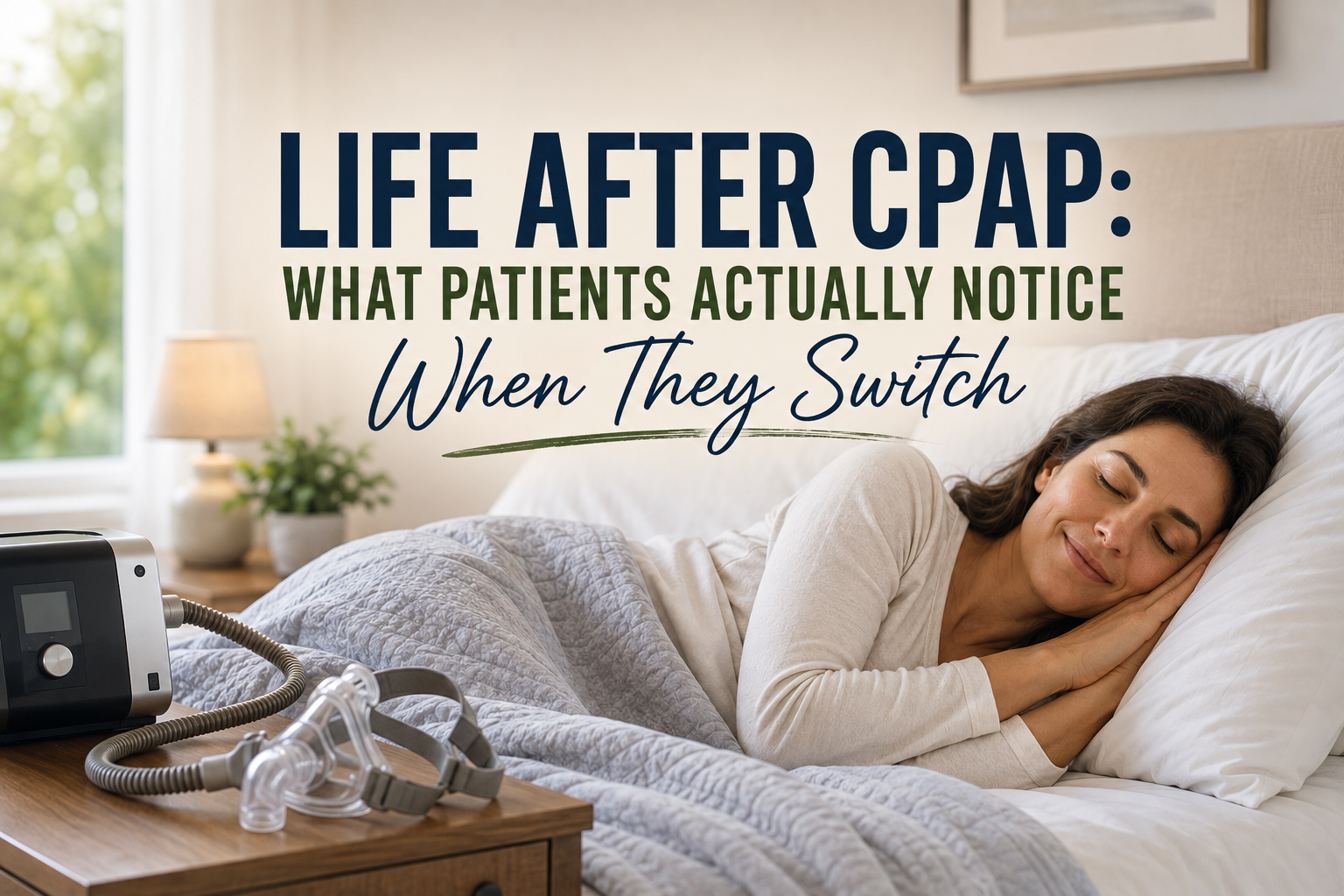
Considering life after CPAP? Learn what patients commonly notice when switching to oral appliance therapy, from better sleep and easier travel to fewer equipment hassles.
For a lot of people, CPAP is the first thing they try after a sleep apnea diagnosis, and for many, it works well. But for just as many others, the mask, the hose, and the hum of the machine become a nightly source of frustration rather than relief. If that sounds familiar, you're not alone, and you're also not out of options. Here's what patients commonly notice when they make the switch to a different approach.
Sleeping Without the Hardware
One of the first things people mention is simply how different it feels to fall asleep without a mask strapped to their face or a hose trailing off the side of the bed. No more waking up with strap marks pressed into your cheeks. No more midnight tangles with tubing. No more feeling like you're hooked up to a machine just to get through the night. For many patients, this alone changes how they feel about bedtime altogether, turning it from a chore back into something restful.
Waking Up Without the Side Effects
CPAP works by pushing pressurized air into the airway, and while effective, it can come with side effects that patients live with for months or years: dry mouth, nasal irritation, a sore throat in the morning, or a general feeling of dryness that takes a while to shake off each day. Patients who switch away from CPAP frequently report that these small but persistent irritations simply disappear. Mornings start to feel normal again instead of starting with a recovery period.
Travel Gets Simpler
Anyone who has packed a CPAP machine for a trip knows it's not exactly effortless. Between the machine itself, the hose, the mask, and finding a plug or adapter in an unfamiliar hotel room, travel with CPAP requires planning that can make people dread trips they'd otherwise look forward to. Patients who move to a different approach often describe travel as one of the most noticeable improvements. Packing light, sleeping well on the road, and not worrying about equipment becomes one less thing to think about.
Partners Sleep Better Too
Sleep apnea rarely affects just one person in the bed. Partners often deal with the noise of the machine, the glow of its display, or simply adjusting to a partner who's tethered to equipment every night. When patients switch to a quieter, hardware-free option, it's common for partners to notice the difference just as much, sometimes more, than the patient themselves. Better sleep tends to be contagious in the best way.
It's Not About One Option Being "Better"
None of this is to say CPAP is the wrong choice. For plenty of people, it works well and becomes part of a normal routine without much friction. But for those who've struggled with it, felt discouraged, or quietly stopped using it altogether, it's worth knowing that giving up on CPAP doesn't mean giving up on treatment. There are other paths to the same goal: real, uninterrupted, healthy sleep.
The Bottom Line
If CPAP hasn't been working for you, the frustration you've felt is valid, and it doesn't mean you're stuck. Patients who've made a change often describe feeling like they got their nights, and sometimes their relationships, back. If you're curious what that could look like for you, a conversation with a dentist trained in sleep medicine is a good first step toward finding an approach that actually fits your life.