

Sleep Apnea and Weight: Understanding the Two-Way Relationship
Sleep Apnea and Weight: Understanding the Connection
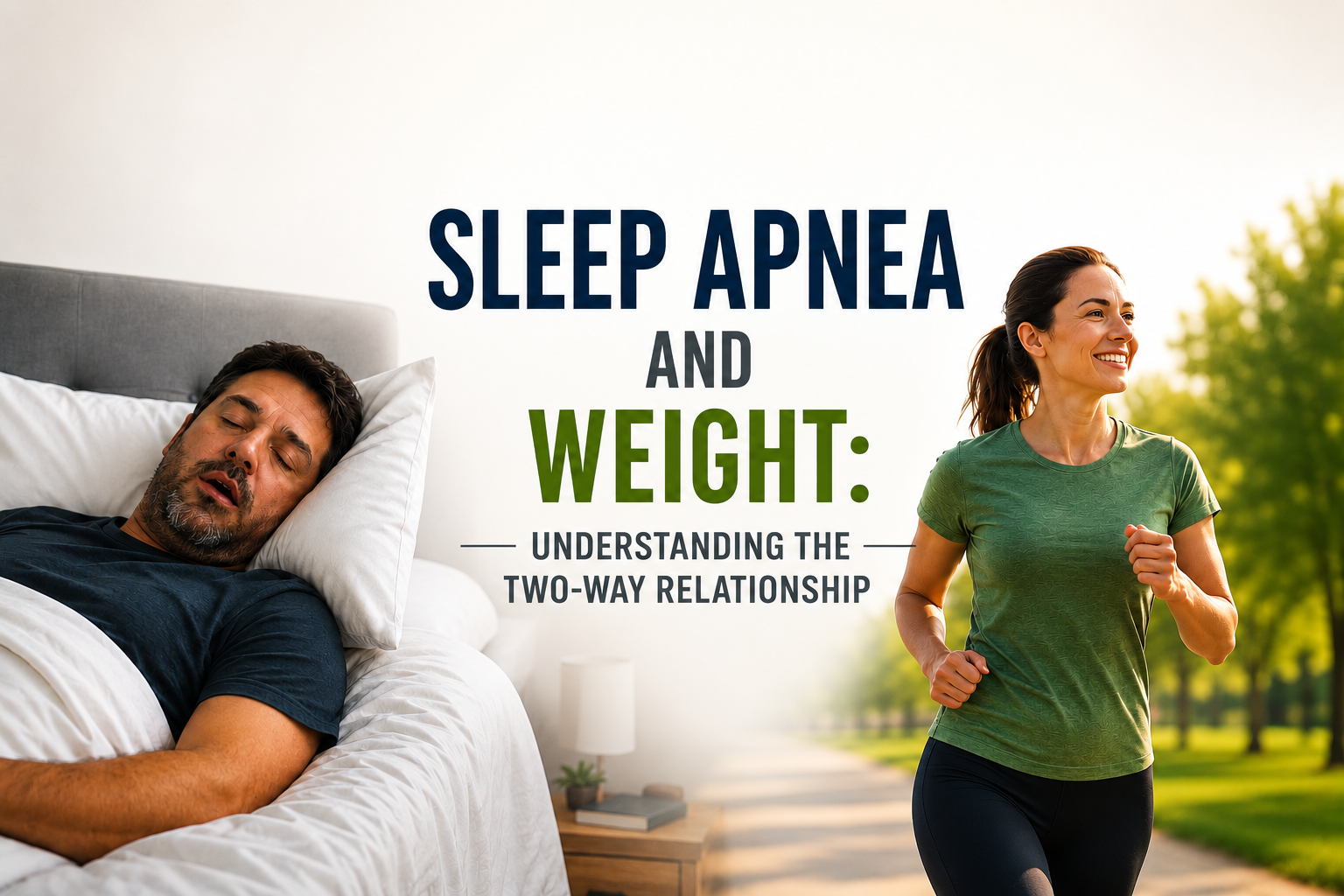
Sleep apnea and weight gain are closely linked in both directions. Learn how each condition affects the other and what it means for your treatment options.
If you have been told that losing weight will help your sleep apnea, that advice is not wrong. But it is only half the picture. The relationship between obstructive sleep apnea (OSA) and weight is a two-way street, and understanding how each condition affects the other is essential for anyone trying to manage their sleep health and their overall wellbeing. For many patients, treating sleep apnea is not just a consequence of losing weight. It may actually be a prerequisite for it.
How Excess Weight Contributes to Sleep Apnea
The most well-established direction of this relationship is how excess body weight increases the risk and severity of obstructive sleep apnea. When a person carries extra weight, particularly around the neck, chest, and abdomen, that additional tissue puts pressure on the upper airway during sleep. Fat deposits around the neck and throat narrow the airway, making it more likely to collapse when the surrounding muscles relax at night.
Research shows that a ten percent increase in body weight is associated with a six-fold increase in the risk of developing moderate to severe obstructive sleep apnea. Obesity is the single strongest modifiable risk factor for sleep apnea, and it is estimated that more than half of obese adults have some degree of OSA. Even modest weight gain can worsen existing sleep apnea, while weight loss can reduce symptom severity significantly in some patients.
How Sleep Apnea Makes Weight Management Harder
Here is where the relationship becomes a cycle. Untreated obstructive sleep apnea does not just result from weight gain. It actively makes weight gain more likely and weight loss significantly harder. This happens through several interconnected mechanisms that affect hormones, metabolism, energy levels, and behavior.
When sleep is repeatedly disrupted by apnea events, the body does not get the restorative rest it needs. This chronic sleep deprivation triggers an increase in ghrelin, the hormone that signals hunger, and a decrease in leptin, the hormone that signals fullness. The result is that people with untreated sleep apnea tend to feel hungrier throughout the day, crave higher-calorie foods, and feel less satisfied after eating. This hormonal imbalance alone can make sticking to a healthy diet feel nearly impossible.
Fatigue from poor sleep quality also reduces physical activity. When you are exhausted from a night of fragmented sleep, exercise is the last thing you want to do. Over time, reduced activity combined with increased caloric intake creates the conditions for steady weight gain, which in turn worsens the sleep apnea, which worsens the fatigue, which worsens the weight. It is a cycle that is difficult to break without addressing the sleep disorder directly.
The Metabolic Connection
Beyond hunger hormones and energy levels, untreated sleep apnea has deeper metabolic effects that complicate weight management. Chronic intermittent hypoxia, the repeated drops in blood oxygen that occur during apnea events, triggers inflammation and oxidative stress throughout the body. This metabolic disruption is associated with insulin resistance, a condition in which the body's cells become less responsive to insulin and blood sugar regulation becomes impaired.
Insulin resistance is a key driver of weight gain and a precursor to type 2 diabetes. Studies have found that people with untreated obstructive sleep apnea have significantly higher rates of insulin resistance compared to people without the condition, independent of body weight. This means that even patients who are not obese can experience metabolic consequences from untreated sleep apnea that make maintaining a healthy weight more difficult.
Does Treating Sleep Apnea Help With Weight Loss
This is one of the most common questions dental sleep medicine specialists hear, and the answer is nuanced. Treating sleep apnea does not cause weight loss directly. However, by improving sleep quality, restoring hormonal balance, reducing daytime fatigue, and improving metabolic function, effective sleep apnea treatment removes many of the barriers that make weight loss so difficult for people with the condition.
Patients who achieve good compliance with sleep apnea treatment, whether through CPAP therapy or oral appliance therapy, often report having more energy for physical activity, fewer cravings, and an improved ability to make consistent healthy choices. While treatment alone is unlikely to produce dramatic weight loss, it creates the physiological conditions that make lifestyle changes more achievable and more sustainable.
Treatment Options That Work Regardless of Weight
One of the most important things to understand is that sleep apnea treatment should not be delayed until after weight loss. The health risks of untreated obstructive sleep apnea, including elevated blood pressure, cardiovascular disease, stroke risk, and impaired cognitive function, are present regardless of body weight and require treatment now.
Continuous positive airway pressure (CPAP) therapy is the most commonly prescribed treatment for moderate to severe sleep apnea and is effective across a wide range of body types and severity levels. For patients with mild to moderate obstructive sleep apnea, or for those who struggle with CPAP compliance, oral appliance therapy offers a highly effective alternative. A custom-fitted oral appliance repositions the jaw to keep the airway open during sleep, requires no mask or machine, and is easy to use consistently, which is critical for long-term outcomes.
If you are managing your weight and also experiencing symptoms of sleep apnea, including loud snoring, daytime sleepiness, morning headaches, or waking with a dry mouth, addressing both together gives you the best chance of meaningful, lasting improvement in your health.