

New Year Health Tips That Can Improve Sleep Apnea and Snoring
New Year Health Tips That Improve Sleep Apnea and Snoring
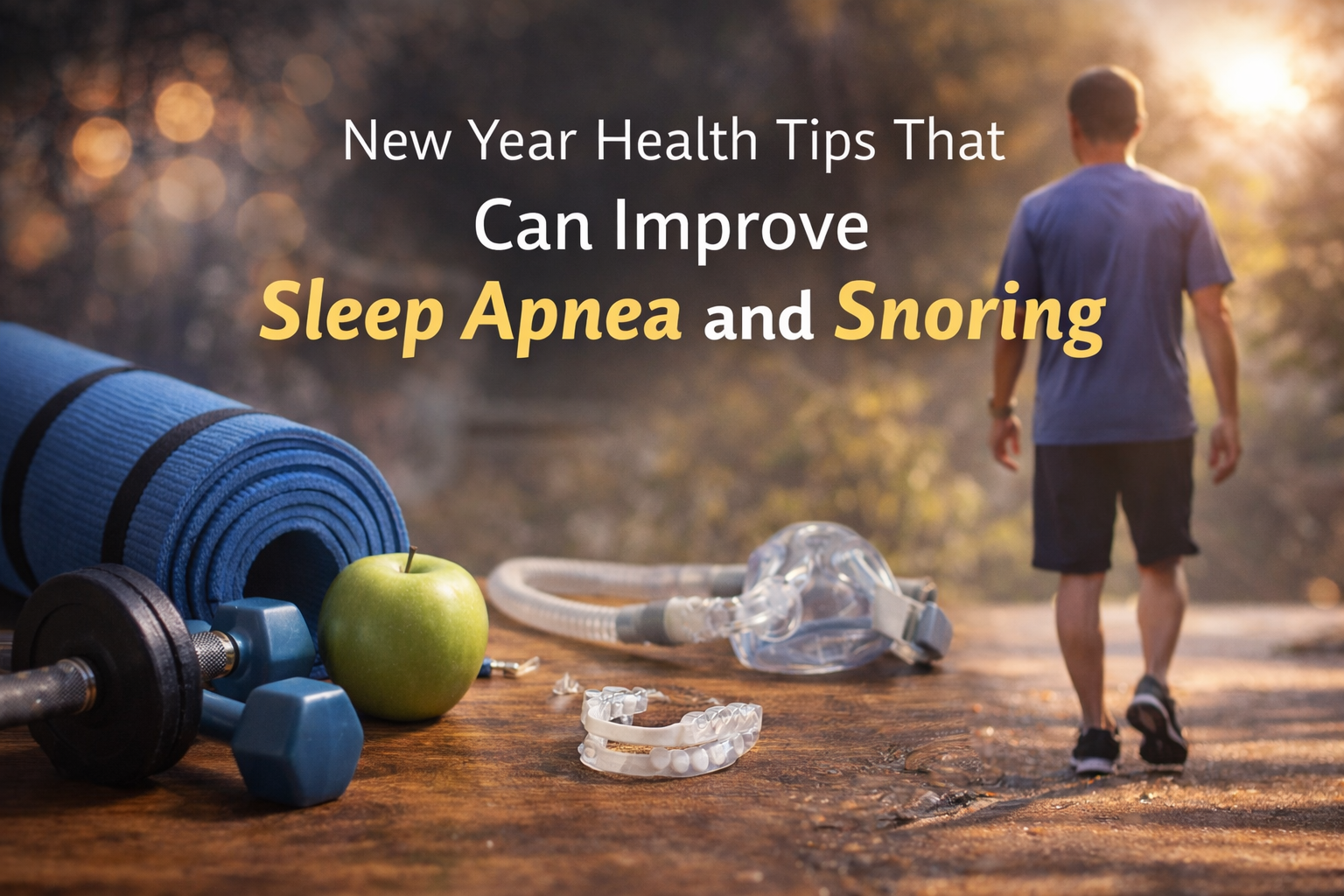
The start of a new year often brings renewed focus on both physical and mental health. Many people set New Year’s Resolutions that help them to commit to eating better, exercising more, or losing weight, and while these goals are worthwhile, they can also play a meaningful role in improving sleep quality.
For individuals who snore or struggle with sleep apnea, certain lifestyle changes may help reduce symptoms and support better breathing at night. However, it’s important to understand what these changes can - and cannot - do. While healthy habits can improve sleep apnea and snoring, they do not replace proper diagnosis or treatment.
This guide highlights evidence-based health tips for the new year that can positively impact sleep apnea and snoring, while emphasizing why medical evaluation remains essential.
Why Lifestyle Changes Matter for Sleep Apnea and Snoring
Obstructive sleep apnea (OSA) occurs when the airway collapses or becomes blocked during sleep, leading to repeated breathing interruptions. Snoring is often an early warning sign of airway resistance and, in many cases, undiagnosed sleep apnea.
Research from the American Academy of Sleep Medicine shows that certain lifestyle factors such as weight, alcohol use, and sleep habits, can influence airway stability during sleep. Addressing these factors can reduce symptom severity and improve overall sleep quality.
1. Prioritize Healthy Weight Management
Excess body weight, particularly around the neck and upper airway, increases pressure on the airway during sleep. This makes collapse more likely and worsens both snoring and sleep apnea.
Studies published in sleep medicine journals have consistently shown that weight loss can reduce the frequency and severity of apnea events in overweight patients, justifying that even modest weight reduction can lead to measurable improvements in breathing during sleep.
New year tip:
Focus on sustainable weight management rather than extreme diets. Consistency matters more than rapid results!
2. Exercise Regularly—Even Without Weight Loss
Physical activity benefits sleep apnea in ways that go beyond weight loss. Research cited by the American Thoracic Society indicates that regular exercise can improve sleep quality, reduce inflammation, and strengthen respiratory function.
Exercise has also been linked to:
- Fewer nighttime awakenings
- Improved oxygen utilization
- Better overall sleep efficiency
New year tip:
Aim for at least 150 minutes of moderate activity per week. Walking, cycling, or swimming all count.
3. Reduce Alcohol—Especially in the Evening
Alcohol relaxes the muscles of the throat and tongue, increasing airway collapse during sleep. It also suppresses the brain’s ability to respond to breathing disruptions.
The American Academy of Sleep Medicine warns that alcohol consumption before bedtime can worsen snoring and significantly increase the severity of obstructive sleep apnea—even in people without a formal diagnosis.
New year tip:
Avoid alcohol within three to four hours of bedtime to reduce airway relaxation.
4. Improve Sleep Position
Sleeping on the back allows gravity to pull the tongue and soft tissues backward, narrowing the airway. Positional therapy—encouraging side sleeping—has been shown to reduce snoring and apnea events in some individuals.
New year tip:
Use body pillows or positional devices to help maintain side sleeping throughout the night.
5. Practice Consistent Sleep Hygiene
Poor sleep habits can worsen fatigue and make sleep apnea symptoms more noticeable. According to the Centers for Disease Control and Prevention (CDC), consistent sleep schedules support better sleep quality and daytime alertness.
Helpful habits include:
- Going to bed and waking up at the same time daily
- Keeping the bedroom cool, dark, and quiet
- Avoiding screens before bedtime
- Limiting caffeine later in the day
New year tip:
Consistency matters more than perfection—aim for gradual improvement.
6. Address Nasal Congestion and Allergies
Nasal obstruction increases resistance in the airway, forcing mouth breathing and worsening snoring. Treating allergies and congestion can improve airflow and reduce nighttime breathing strain.
The Mayo Clinic notes that managing nasal symptoms may help reduce snoring and improve comfort during sleep apnea treatment.
New year tip:
Use saline rinses, allergy management strategies, or physician-recommended treatments as needed.
Why These Tips Help—But Aren’t a Cure
While these health changes can reduce symptoms and improve sleep quality, they do not eliminate sleep apnea in many patients. Research shows that sleep apnea can persist even in physically active, healthy-weight individuals.
Without diagnosis, untreated sleep apnea continues to increase the risk of:
- High blood pressure
- Heart disease and stroke
- Type 2 diabetes
- Cognitive decline
- Daytime accidents
A sleep study ordered by a physician remains the only way to confirm whether sleep apnea is present.
Pair Healthy Habits With Medical Care
For patients diagnosed with obstructive sleep apnea, treatment options may include CPAP therapy or oral appliance therapy provided by a dentist trained in dental sleep medicine. These treatments work best when paired with healthy lifestyle habits.
When sleep apnea is properly treated, patients often report:
- Improved energy and focus
- Better blood pressure control
- Enhanced workout recovery
- Greater success maintaining healthy routines
Conclusion
The new year is an ideal time to invest in better health—and better sleep. Healthy habits like exercise, weight management, and improved sleep routines can directly reduce snoring and support sleep apnea improvement.
However, lifestyle changes work best alongside professional evaluation and treatment. If snoring or fatigue are ongoing issues, making sleep health part of your new year goals could be one of the most impactful decisions you make.