

Checking for Sleep Apnea Should Be on Your 2026 Health Goals
Make Sleep Health a 2026 Goal: Why Checking for Sleep Apnea Matters
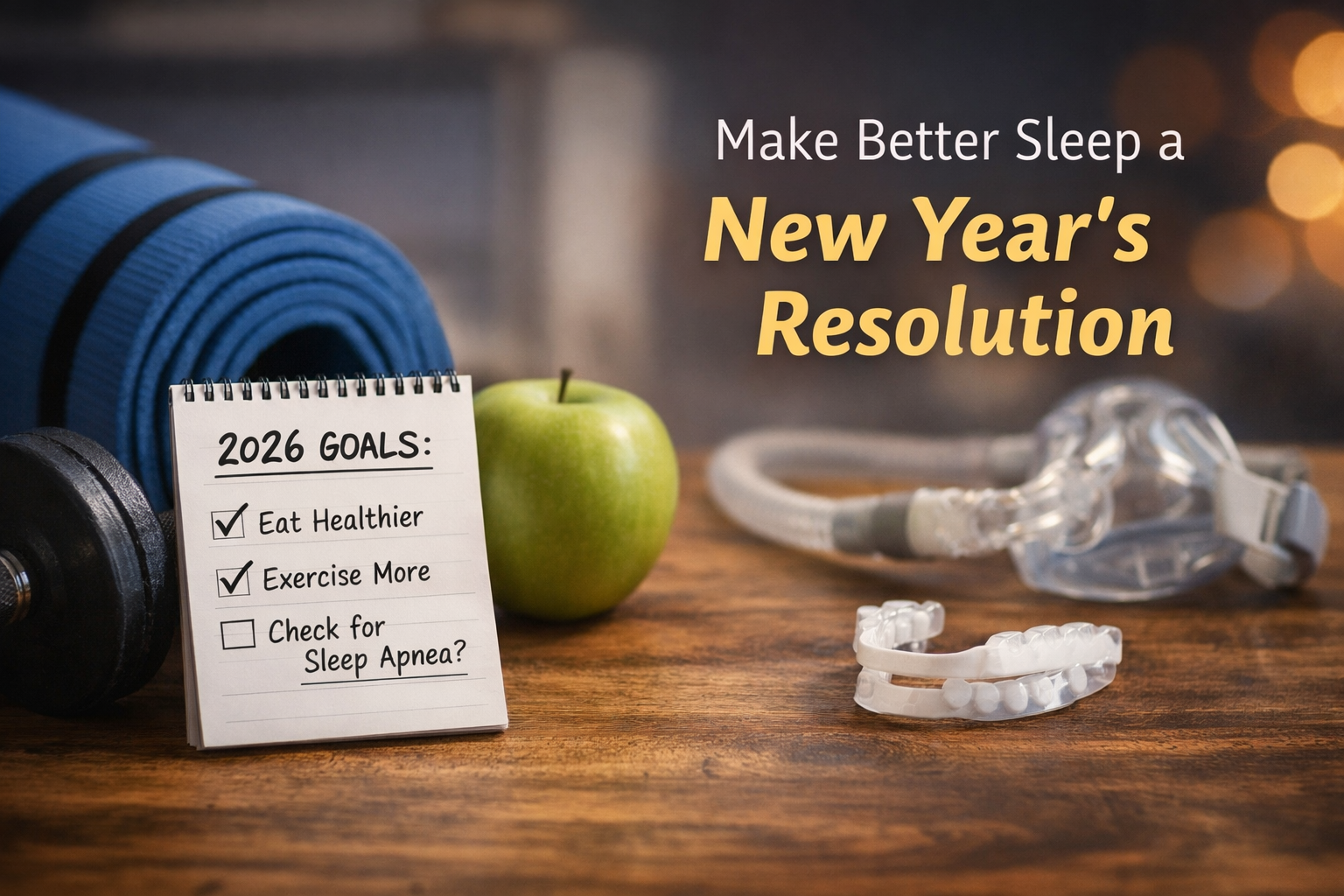
Making fitness and nutrition goals for 2026? Learn why checking for sleep apnea should be part of your New Year’s health plan—and why medical evaluation matters.
As a new year approaches, many people begin setting health goals for the upcoming year in an effort to start off on the right foot. Common resolutions often include eating healthier, exercising more, losing weight, or cutting back on alcohol or the occasional sweet. These are all positive steps—but one important area of health is often overlooked: sleep.
Quality sleep is the foundation that supports energy, focus, metabolism, heart health, and overall well-being. If snoring, poor sleep, or chronic fatigue are part of your life, checking for sleep apnea should be on your list of “to-do’s” heading into 2026. While lifestyle changes can help, nothing replaces a proper evaluation by a medical professional.
Why Sleep Should Be a Health Priority in 2026
Sleep affects nearly every system in the body. Yet many people accept poor sleep as “normal,” especially if they’re busy, stressed, or aging. Chronic sleep disruption can quietly contribute to:
- High blood pressure
- Heart disease and stroke
- Type 2 diabetes
- Weight gain and hormone imbalance
- Memory and concentration problems
- Daytime fatigue and increased accident risk
One of the most common—and underdiagnosed—causes of poor sleep is obstructive sleep apnea (OSA), a condition where breathing repeatedly stops and starts during sleep.
How Healthy Habits Can Help Snoring and Sleep Apnea
New Year’s resolutions like an improved diet and regular exercise can absolutely play a role in better sleep health.
Weight management:
Excess weight, particularly around the neck and upper airway, can increase airway collapse during sleep. Weight loss may reduce snoring and, in some cases, lessen the severity of sleep apnea.
Exercise:
Regular physical activity improves sleep quality, supports respiratory health, and can reduce the frequency of sleep-disordered breathing events.
Nutrition and alcohol reduction:
Eating balanced meals and limiting alcohol—especially in the evening—can decrease airway relaxation and nighttime breathing disturbances.
These changes are meaningful and worth pursuing. However, they are not a substitute for diagnosis or treatment when sleep apnea is present.
Why Lifestyle Changes Alone Aren’t Enough
While healthy habits can support better sleep, sleep apnea is a medical condition that requires proper evaluation. Many people with sleep apnea are not overweight, exercise regularly, and eat well—yet still experience repeated breathing interruptions at night.
Snoring may improve with lifestyle changes, but sleep apnea can persist silently, continuing to strain the heart and brain without obvious symptoms. This is why relying on self-diagnosis or assuming improvement without testing can be risky.
A sleep study—ordered by a physician—remains the gold standard for diagnosing sleep apnea. Once diagnosed, treatment options can be tailored to the individual.
Why Checking for Sleep Apnea Belongs on Your 2026 Goals List
Adding “check my sleep health” to your New Year’s goals is a proactive step that can protect your long-term health.
You should consider evaluation for sleep apnea if you:
- Snore loudly or consistently
- Experience pauses in breathing during sleep (often noticed by a partner)
- Wake up tired despite a full night’s sleep
- Struggle with daytime fatigue, brain fog, or irritability
- Have high blood pressure, heart disease, or diabetes
- Have tried lifestyle changes but still don’t feel rested
Identifying sleep apnea early allows for effective treatment—often before more serious health consequences develop.
The Role of Medical Professionals in Sleep Apnea Care
Sleep apnea diagnosis and treatment should always involve medical professionals. Sleep physicians use clinical evaluation and sleep studies to determine whether apnea is present and how severe it is.
For patients diagnosed with obstructive sleep apnea, treatment may include CPAP therapy or oral appliance therapy, which is provided by dentists trained in dental sleep medicine. These providers work in collaboration with physicians to ensure treatment is effective and monitored over time.
No matter the treatment path, professional guidance ensures your care is safe, evidence-based, and tailored to your needs.
A Smarter Kind of New Year’s Resolution
Working out more and eating healthier are excellent goals for 2026—but they’re even more powerful when paired with proper medical care. Checking for sleep apnea isn’t about replacing healthy habits; it’s about supporting them.
When sleep improves, patients often notice more energy for exercise, better focus, improved mood, and greater success sticking to their health goals.
Conclusion
As you look ahead to 2026, consider making sleep health part of your resolutions. Lifestyle changes can support better sleep and may reduce snoring, but they can’t diagnose or treat sleep apnea on their own.
A simple evaluation with a medical professional could uncover an issue that’s been holding your health back for years. Better sleep isn’t just a goal—it’s the foundation that helps all your other goals succeed.