
How Summer Sleep Disruptions Can Make Sleep Apnea Worse
Summer Sleep Disruptions and Sleep Apnea
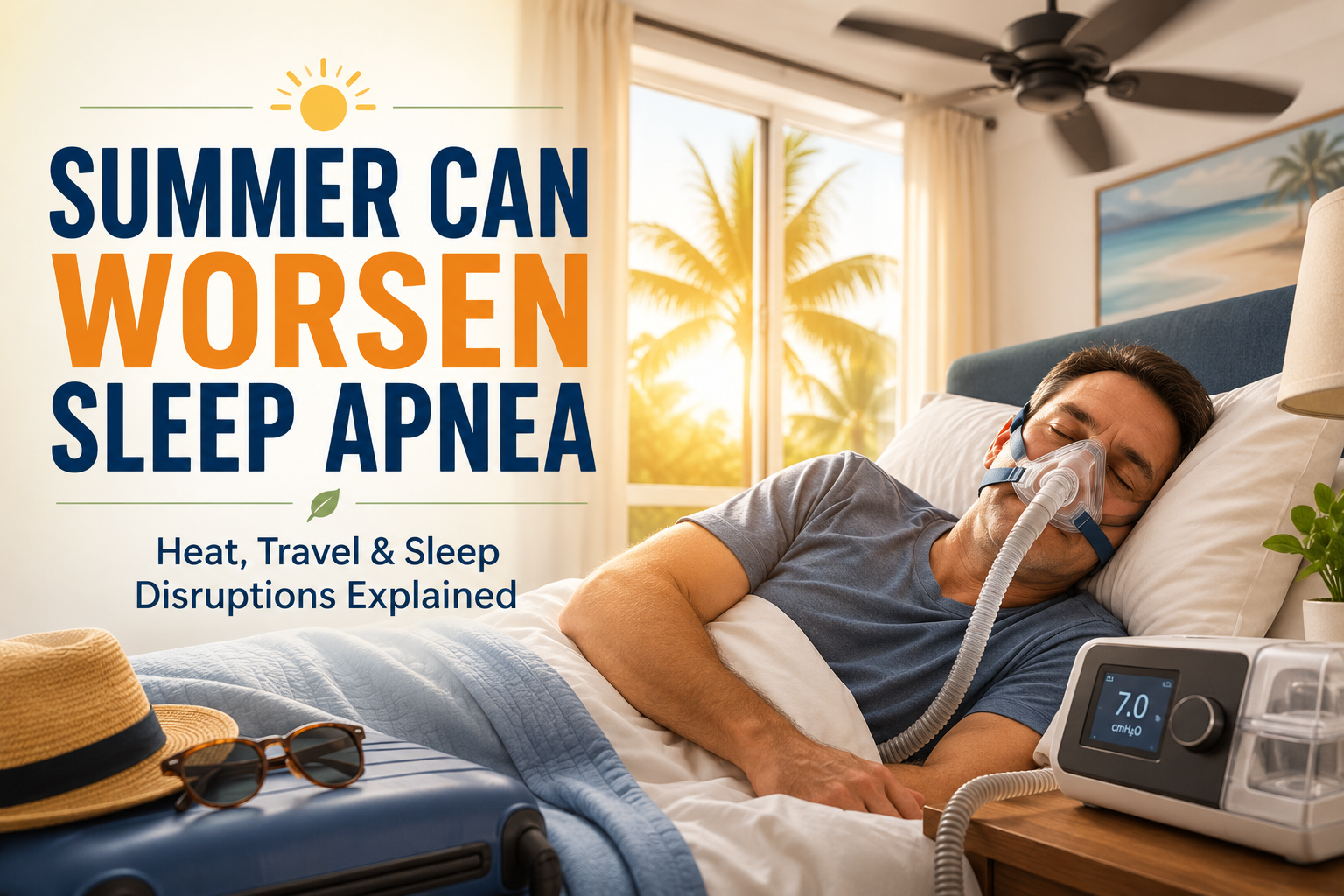
Longer days, heat, and travel can worsen sleep apnea symptoms. Learn how summer affects your sleep and what to do about it.
Summer is supposed to be a time for rest and relaxation. But for people living with obstructive sleep apnea (OSA), the season can quietly make symptoms worse. Between the longer daylight hours, rising temperatures, irregular schedules, and increased travel, summer throws nearly every sleep hygiene rule out the window. If you have been diagnosed with sleep apnea, or suspect you might have it, understanding how summer affects your sleep is an important step toward better sleep health.
Why Longer Days Disrupt Your Sleep Cycle
One of the most overlooked summer sleep disruptors is light exposure. Your body's circadian rhythm, the internal clock that regulates when you feel sleepy and when you feel awake, is directly tied to light and darkness. When the sun sets later and rises earlier, your brain gets confused about when it's actually time to wind down.
This delayed sleep onset is a real problem for people with obstructive sleep apnea. Sleep apnea episodes, where breathing stops temporarily during sleep, tend to be more frequent and more severe during certain sleep stages, particularly REM sleep. When your circadian rhythm is off and you're getting less total sleep, you spend less time in the deeper, restorative stages, which means your body and brain never fully recover. Over time, this compounds the cognitive and cardiovascular effects already associated with untreated sleep apnea.
Heat and Humidity: A Hidden Sleep Apnea Trigger
Hot, humid nights do more than make you uncomfortable. They can directly worsen obstructive sleep apnea symptoms. Here's why: heat causes nasal passages and soft tissue in the throat to swell, narrowing the airway. For someone already prone to airway obstruction, even minor swelling can increase the frequency of apnea episodes.
Humidity also affects CPAP therapy compliance. Continuous positive airway pressure (CPAP) therapy is the gold standard treatment for moderate to severe sleep apnea, but in humid summer conditions, patients often struggle with condensation in their tubing, called "rainout," which causes water to pool in the mask and disrupt sleep. If you use a CPAP machine and notice increased discomfort or disruptions during the summer months, this is likely the culprit.
Adjusting your CPAP humidifier settings seasonally, or switching to a heated tube if you don't already use one, can make a significant difference in sleep quality and therapy compliance during summer.
Irregular Schedules and Sleep Debt
Summer often brings with it later bedtimes, social events, vacations, and inconsistent routines. For people with sleep apnea, this irregularity is particularly harmful. Sleep debt, the cumulative effect of not getting enough sleep, does not just make you tired. It impairs your immune system, affects blood pressure, and can worsen the metabolic effects associated with untreated obstructive sleep apnea.
Research consistently shows that sleep apnea is linked to higher risks of cardiovascular disease, type 2 diabetes, and hypertension. Each night of poor sleep due to summer disruptions adds to that risk. Maintaining a consistent sleep schedule, even on weekends and vacations, is one of the most effective strategies for managing sleep apnea year-round.
Alcohol and Summer Socializing
Summer and alcohol go hand in hand for many people, but it's worth knowing that alcohol is one of the most significant behavioral triggers for sleep apnea episodes. Even moderate alcohol consumption before bed relaxes the muscles in the throat more than usual, increasing the likelihood of airway collapse and apnea events. If you're attending backyard barbecues and summer gatherings, being mindful of alcohol intake, especially in the hours before sleep, can meaningfully reduce nighttime symptoms.
When to See a Sleep Specialist
If you've noticed that your sleep feels worse during the summer months, that you're waking up more frequently, snoring louder, or feeling more fatigued during the day, it may be time to speak with a dental sleep medicine specialist. Many patients are surprised to learn that sleep apnea treatment does not always require a bulky CPAP machine. Oral appliance therapy is a comfortable, travel-friendly alternative that is particularly well-suited for mild to moderate obstructive sleep apnea.
Summer is a
ctually an ideal time to address sleep apnea. With schedules more flexible and a new routine ahead in the fall, starting treatment now means you'll be sleeping better before the year is out.