

Why Nasal Congestion at Night Is a Bigger Problem Than You Think
Nasal Congestion at Night: Causes, Risks & How It Affects Your Sleep
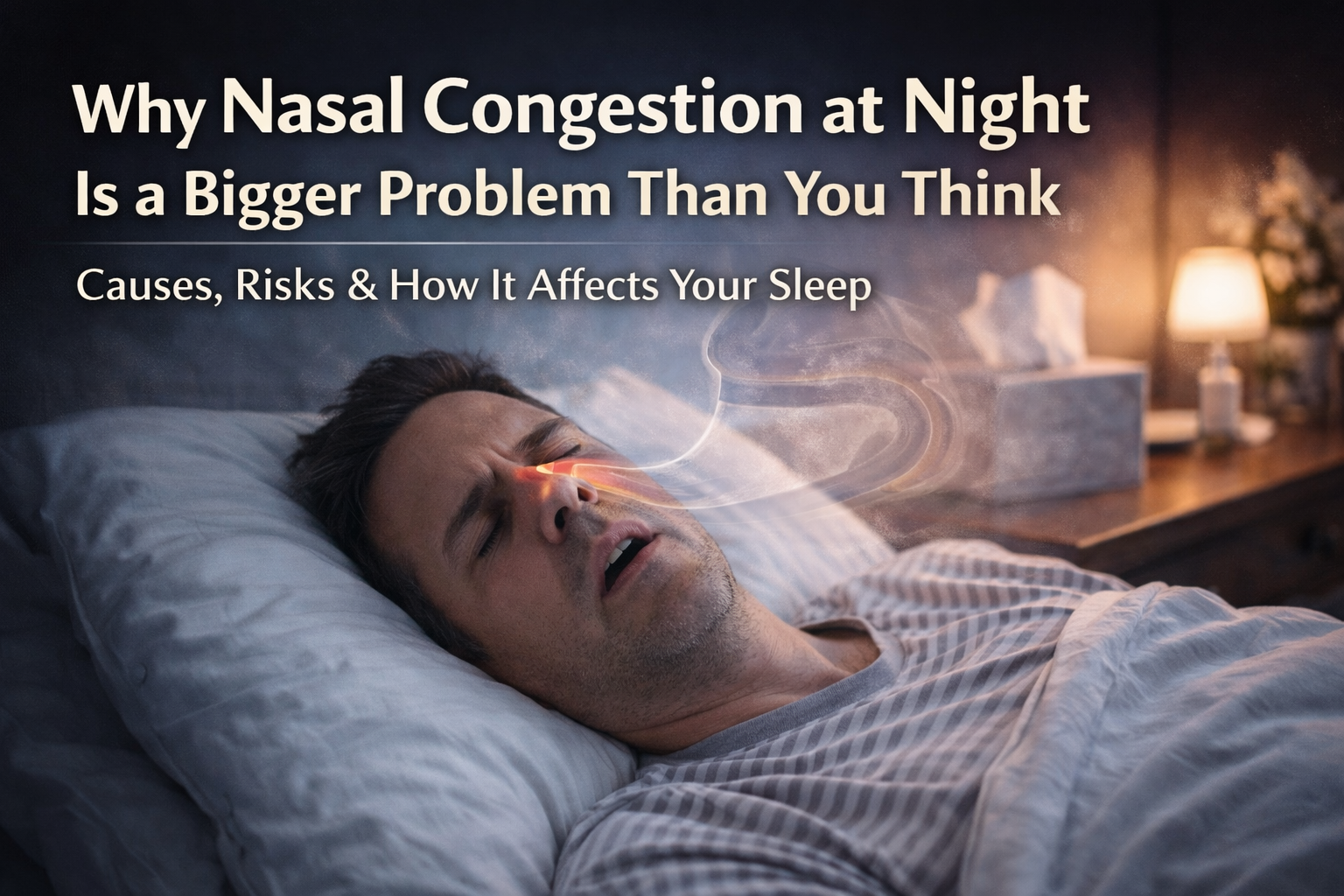
It’s More Than Just a Stuffy Nose
Most people don’t think twice about nasal congestion at night.
It’s easy to blame allergies, a cold, or even the weather—and assume it’s just a temporary annoyance.
But if you’re consistently going to bed congested or waking up unable to breathe clearly, it could be affecting your sleep in ways you don’t realize.
Because when your nose is blocked, your body has to work harder to breathe—and that can disrupt your entire night of sleep.
Why Nasal Breathing Matters for Sleep
Your body is designed to breathe through your nose—especially while you sleep.
Proper nasal breathing helps:
- Filter and humidify the air you breathe
- Regulate airflow into your lungs
- Support steady, uninterrupted breathing
When your nasal passages are clear, your breathing stays smooth and your body can fully relax.
But when they’re not, things start to change.
What Happens When You’re Congested at Night
When your nose is blocked, your body often switches to mouth breathing.
That shift can lead to:
- Snoring
- Dry mouth or sore throat in the morning
- Restless or fragmented sleep
- More frequent waking during the night
Mouth breathing also changes the position of your tongue and jaw, which can narrow your airway—making it harder for air to pass through freely.
The Hidden Connection to Sleep Apnea
Here’s where it becomes more serious.
Nasal congestion doesn’t just make sleep uncomfortable, it can contribute to or worsen sleep apnea.
When airflow through the nose is restricted:
- The airway becomes more prone to collapse
- Breathing becomes less stable
- Oxygen levels may fluctuate throughout the night
Even mild congestion can increase resistance in your airway, forcing your body to work harder to breathe while you sleep.
For those already dealing with sleep apnea, congestion can make symptoms worse—and reduce the effectiveness of treatment.
Common Causes of Nighttime Congestion
If this sounds familiar, you’re not alone. Nighttime congestion is extremely common and can be caused by:
- Seasonal allergies (pollen, mold)
- Dust mites or allergens in bedding
- Dry indoor air
- Sinus infections or inflammation
- Deviated septum or structural issues
Sometimes it’s temporary. Other times, it’s something more persistent that needs attention.
Signs Your Congestion Is Affecting Your Sleep
It may be time to look deeper if you regularly experience:
- Difficulty breathing through your nose at night
- Snoring that worsens when you’re congested
- Waking up with a dry mouth
- Feeling tired despite getting enough sleep
- Congestion that doesn’t improve with typical remedies
These are signs that your breathing, and your sleep quality, may be compromised.
What You Can Do to Improve Nighttime Breathing
Small changes can make a big difference:
- Keep your bedroom clean and reduce allergens
- Wash bedding regularly in hot water
- Use a humidifier if the air is dry
- Avoid sleeping flat on your back if congestion is severe
- Try saline rinses or doctor-recommended treatments
But if congestion is ongoing, it’s important to understand why.
When to Seek Professional Help
If nasal congestion is affecting your sleep on a regular basis, it’s worth talking to a specialist.
Especially if you also experience:
- Loud snoring
- Gasping or interrupted breathing
- Chronic fatigue
These could point to an underlying sleep disorder like sleep apnea.
Better Breathing Starts with the Right Answers
Nasal congestion at night might seem minor, but it can have a major impact on how well you sleep and how you feel during the day.
The good news? You don’t have to live with it.
With the right evaluation and care, you can improve your breathing, your sleep, and your overall health.
Ready to Breathe - and Sleep - Better?
If nighttime congestion is disrupting your sleep, our team is here to help.
We’ll identify what’s causing the issue and guide you toward effective solutions that actually work.