

The Overlooked Link Between Snoring and Brain Health
The Link Between Snoring and Brain Health
Snoring Is Not Always Harmless
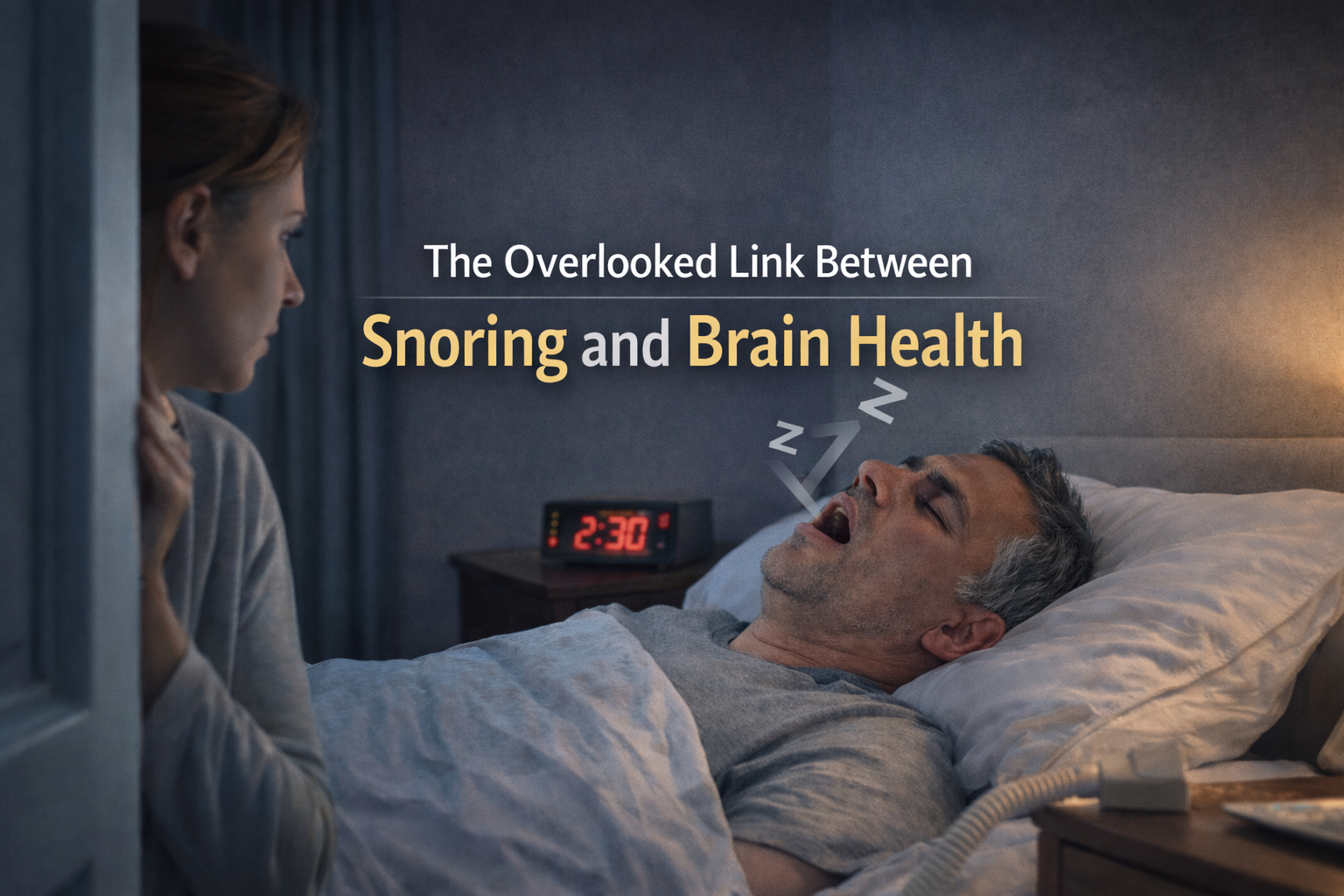
Snoring is often dismissed as a minor annoyance or an inconvenience for bed partners. But growing research shows that chronic snoring may be more than just a noise issue. It can be a sign of disrupted breathing during sleep, reduced oxygen levels, and impaired brain health.
For many people, frequent snoring is linked to obstructive sleep apnea, a medical condition that repeatedly interrupts breathing during sleep. These disruptions do not just affect rest, they can impact memory, focus, mood, and long term brain function.
Understanding the connection between snoring and brain health is critical, especially because many individuals with sleep disordered breathing remain undiagnosed.
How Snoring Can Affect the Brain
Snoring itself does not directly damage the brain, but it often reflects underlying airway obstruction and fragmented sleep. When airflow is restricted, oxygen levels may drop and sleep becomes repeatedly interrupted.
According to the American Academy of Sleep Medicine and the National Institutes of Health, disrupted sleep and intermittent oxygen deprivation can:
- Reduce oxygen delivery to brain tissue
- Impair memory consolidation
- Disrupt attention and decision making
- Increase inflammation in the brain
- Affect emotional regulation and mood
Over time, these effects can accumulate and influence overall cognitive health.
Snoring, Sleep Apnea, and Oxygen Deprivation
Obstructive sleep apnea is one of the most common causes of loud, chronic snoring. During apnea events, breathing pauses for ten seconds or longer, sometimes dozens of times per hour.
These pauses lead to:
- Repeated drops in blood oxygen levels
- Micro awakenings that fragment sleep
- Activation of the body’s stress response
The brain is particularly sensitive to oxygen fluctuations. Studies published in neurology and sleep medicine journals show that chronic oxygen deprivation is associated with changes in brain structure and function.
Cognitive Effects Linked to Snoring and Sleep Apnea
Research consistently shows a connection between untreated sleep apnea and cognitive impairment.
Common brain related symptoms include:
- Difficulty concentrating
- Memory problems
- Slower reaction times
- Reduced executive function
- Increased irritability and mood changes
The Centers for Disease Control and Prevention notes that insufficient and disrupted sleep affects learning, problem solving, and emotional stability.
For adults in demanding jobs or older adults concerned about cognitive decline, these effects can significantly impact daily life.
Snoring and the Risk of Dementia
Emerging research suggests that untreated sleep apnea may increase the risk of neurodegenerative disease.
Studies referenced by the National Institute on Aging indicate that sleep plays a vital role in clearing metabolic waste from the brain. Poor sleep quality may interfere with this process.
Sleep apnea and chronic snoring have been associated with:
- Increased risk of mild cognitive impairment
- Faster cognitive decline in older adults
- Higher prevalence of Alzheimer’s disease markers
While snoring alone does not cause dementia, it may signal sleep disruptions that contribute to long term brain risk.
Why Brain Symptoms Are Often Missed
Many people do not associate snoring with brain health. Cognitive symptoms are often attributed to:
- Stress
- Aging
- Poor concentration
- Busy schedules
Because snoring happens during sleep, individuals may be unaware of the severity of their breathing disturbances. Bed partners are often the first to notice loud snoring, pauses in breathing, or gasping at night.
Ignoring these signs can delay diagnosis while the brain continues to experience nightly stress.
When Snoring Should Prompt a Sleep Apnea Evaluation
Snoring should be evaluated by a healthcare provider when it occurs alongside:
- Daytime sleepiness
- Memory or focus problems
- Morning headaches
- Mood changes
- High blood pressure
- Observed breathing pauses during sleep
The American Academy of Sleep Medicine recommends sleep apnea screening for individuals with chronic snoring and cognitive symptoms.
Diagnosis requires a sleep study ordered by a physician, either in a sleep lab or through a validated home sleep test.
How Treating Sleep Apnea Supports Brain Health
Treatment of sleep apnea can lead to measurable improvements in cognitive function and quality of life.
Effective treatment may:
- Improve attention and memory
- Reduce daytime fatigue
- Support emotional regulation
- Improve overall sleep quality
- Reduce long term neurological risk
Treatment options include CPAP therapy and oral appliance therapy provided by a dentist trained in dental sleep medicine. Many patients report mental clarity and energy improvements after consistent treatment.
Snoring Is a Brain Health Signal Worth Listening To
Snoring is not just a nighttime inconvenience. It can be an important signal that the brain is not receiving the oxygen and restorative sleep it needs.
Addressing snoring and sleep apnea early can help protect cognitive health, support daily functioning, and reduce long term neurological risk.
If snoring is persistent or accompanied by memory, focus, or mood changes, seeking a professional evaluation may be one of the most important steps you take for your brain and overall health.