

How the Change of Seasons Can Quietly Disrupt Your Sleep Apnea
How the Change of Seasons Can Quietly Disrupt Your Sleep Apnea
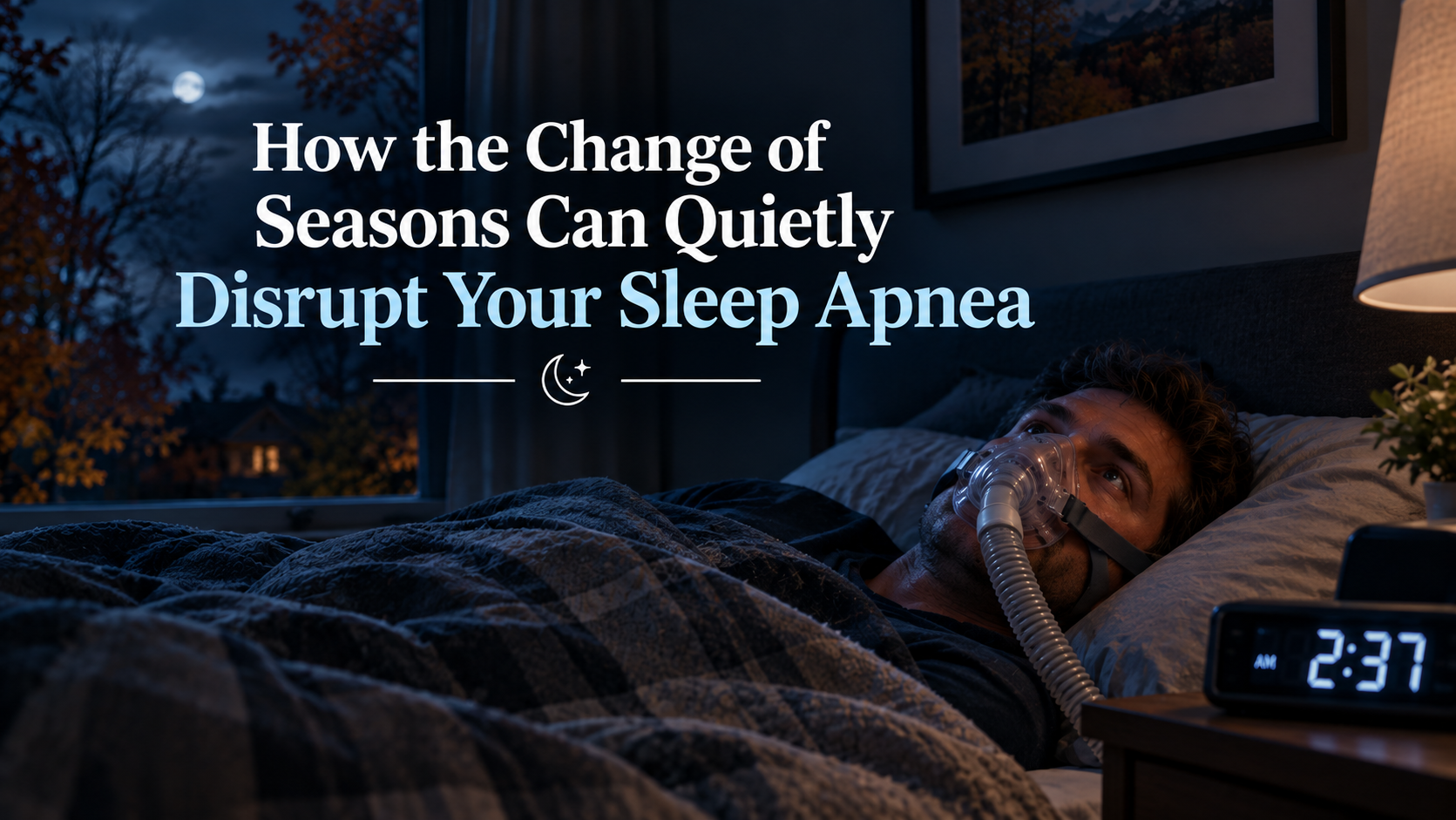
Learn how shorter days, dry indoor air, and changing routines can quietly disrupt sleep apnea, plus simple ways to protect your sleep this fall.
Fall tends to arrive with a familiar checklist: shorter days, cooler nights, the heat kicking on, holiday planning creeping onto the calendar. Most of it feels harmless, even cozy. But for people managing sleep apnea, or living with it undiagnosed, this seasonal shift can chip away at sleep quality in ways that are easy to miss until symptoms are already worse.
Less Daylight Changes More Than Your Mood
As days shorten heading into fall and winter, the body gets less of the natural light cue it relies on to regulate its internal clock. That internal clock, known as the circadian rhythm, governs far more than when you feel sleepy. It influences hormone release, body temperature, and the timing of the deeper sleep stages your body depends on for real recovery.
Reduced daylight exposure doesn't erase sleep apnea symptoms or cause them outright, but a disrupted circadian rhythm can make existing sleep issues more noticeable. Fragmented, lower-quality sleep tends to compound with fewer daylight hours, leaving many people feeling more fatigued during the fall and winter months even when their nightly hours in bed haven't changed.
Indoor Heat Brings a Different Kind of Air
As temperatures drop, homes shift from air conditioning to forced-air heating, and that switch changes the air you're breathing all night. Heated indoor air tends to be significantly drier than the air you breathe in warmer months. Dry air can irritate the nasal passages and throat, which for someone with sleep apnea, or someone using CPAP or an oral appliance, can mean more nighttime dryness, throat irritation, and a harder time staying comfortably asleep.
For CPAP users specifically, dry indoor air can make the therapy itself feel less comfortable, sometimes leading people to skip nights or shorten their usage without realizing how much that affects their treatment. Research analyzing large-scale PAP therapy data has found that adherence and comfort do shift with the seasons, driven in part by changes in temperature and the bedroom environment.
Routines Get Disrupted Right When Consistency Matters Most
Sleep apnea management, whatever form it takes, works best with consistency: steady bedtimes, steady wake times, and steady use of whatever treatment is prescribed. Fall is notoriously hard on that consistency. Shorter daylight hours often mean less outdoor activity and exercise, both of which support healthy sleep. Add in the ramp-up toward the holiday season, travel, houseguests, later nights, and irregular schedules, and it's easy to see how sleep apnea symptoms can worsen without any single dramatic cause.
What Tends to Show Up This Time of Year
A few patterns are worth watching for as the season shifts. Morning grogginess that feels heavier than usual, even after a full night in bed, is common. Waking up with a dry mouth or scratchy throat more frequently, especially for CPAP users, often points back to indoor air changes. General daytime fatigue that seems to creep in earlier in the afternoon can also reflect both the loss of daylight and disrupted routines working together.
None of these signs are alarming on their own, but if they're showing up consistently, they're worth paying attention to rather than writing off as "just the season."
Small Adjustments That Help
A few changes can offset a lot of this seasonal strain. Using a humidifier, either for the bedroom generally or as an add-on to CPAP therapy, can counter the dryness that comes with indoor heating. Prioritizing morning light exposure, even just stepping outside for a few minutes after waking, helps support the circadian rhythm during a season when natural light is harder to come by. Keeping bedtime and wake time as consistent as possible, even as the holiday season picks up, goes a long way toward protecting sleep quality when everything else is in flux.
If sleep apnea symptoms feel like they're creeping back or getting harder to manage as the weather turns, it's worth checking in rather than assuming it's simply the season taking its toll. A quick conversation with a dentist trained in sleep medicine can help sort out what's a normal seasonal adjustment and what might need a closer look.