

How Stress Affects Your Sleep: Understanding the Connection During Stress Awareness Month
How Stress Affects Sleep and Sleep Apnea | Stress Awareness Month
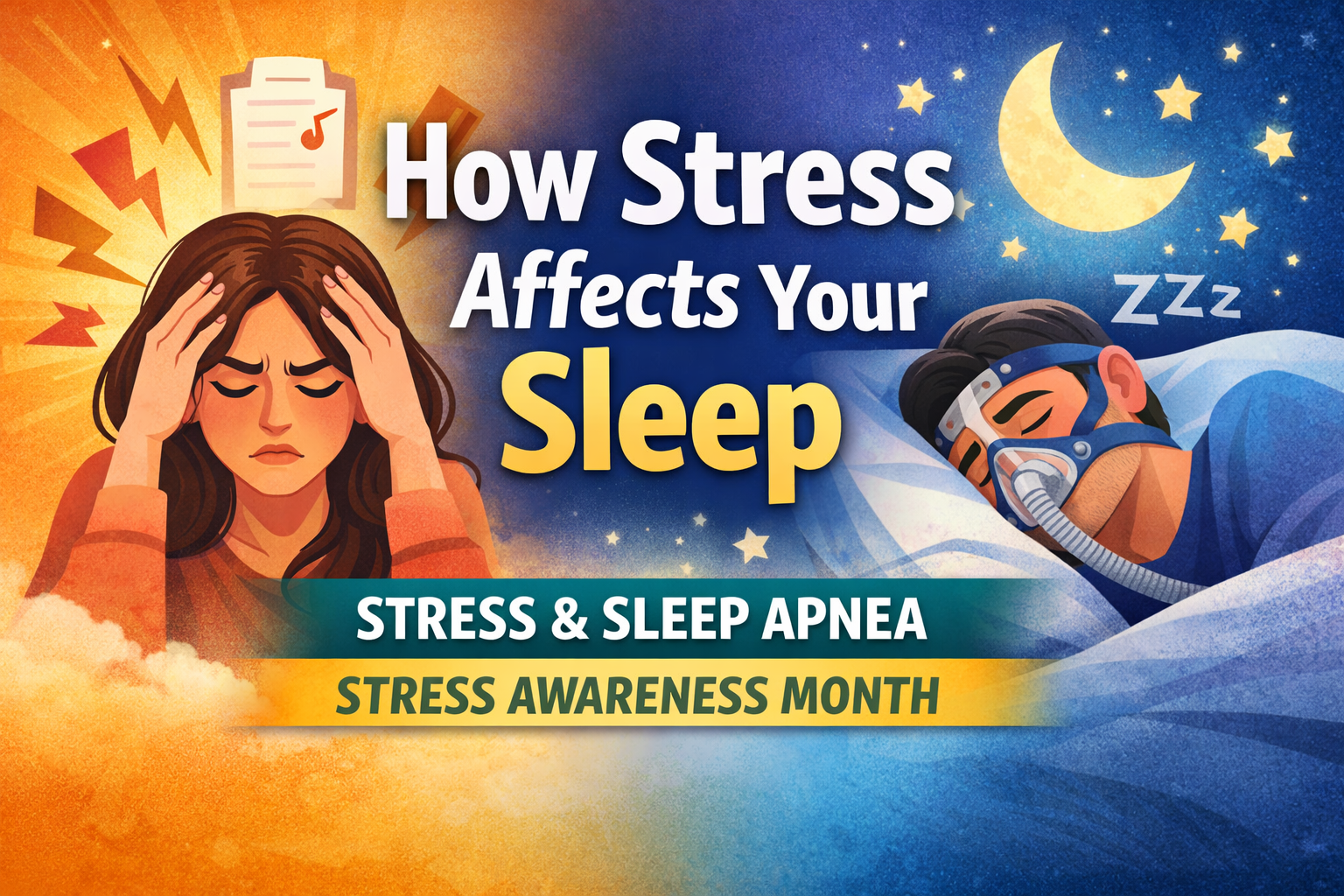
Stress Awareness Month: Why Stress and Sleep Go Hand in Hand
April is Stress Awareness Month, a time to recognize how stress impacts both mental and physical health—including your ability to get quality sleep.
If you’ve ever had trouble falling asleep after a long, stressful day, you’re not alone. Stress is one of the most common causes of sleep disruption, affecting millions of people each year.
But beyond occasional restless nights, chronic stress can lead to long-term sleep issues—and may even influence conditions like sleep apnea.
How Stress Affects Sleep Quality
Stress triggers a natural response in the body known as the “fight-or-flight” system. While helpful in short bursts, prolonged activation can interfere with your ability to relax and fall asleep.
Common Ways Stress Disrupts Sleep:
- Difficulty falling asleep (insomnia)
- Frequent nighttime awakenings
- Racing thoughts or anxiety at bedtime
- Reduced deep and REM sleep
When stress hormones like cortisol remain elevated at night, your body stays in a heightened state of alertness—making restful sleep harder to achieve.
According to sleep research, chronic stress is strongly linked to insomnia and poor sleep efficiency.
The Link Between Stress and Insomnia
Stress is one of the leading contributors to insomnia. Even short-term stress—such as work pressure or major life changes—can lead to temporary sleep disturbances.
Long-term stress, however, can create a cycle:
- Stress makes it harder to sleep
- Poor sleep increases stress levels
- The cycle continues
Breaking this cycle is key to improving both sleep and overall health.
Can Stress Cause Sleep Apnea?
Stress alone does not directly cause sleep apnea, but it can worsen symptoms and make the condition more difficult to manage.
Here’s What Research Suggests:
- Sleep apnea is primarily caused by airway obstruction or neurological factors, not stress
- However, stress can contribute to behaviors and conditions that increase risk, such as:
- Weight gain
- Poor sleep habits
- Increased inflammation
- Stress may also intensify symptoms like fatigue and daytime sleepiness
Additionally, untreated sleep apnea can increase stress on the body—creating a two-way relationship between stress and sleep health.
How Sleep Apnea and Stress Are Connected
While stress doesn’t directly cause sleep apnea, the two are closely linked in how they affect your body.
The Overlap Between Stress and Sleep Apnea:
- Both can lead to daytime fatigue and low energy
- Both are associated with increased risk of cardiovascular issues
- Poor sleep from apnea can raise stress hormone levels
- Stress can make it harder to follow through with treatment
This is why addressing both stress and sleep health together is so important.
Signs Stress May Be Affecting Your Sleep
If you’re unsure whether stress is impacting your sleep, look for these common signs:
- Trouble falling asleep despite feeling tired
- Waking up frequently during the night
- Feeling unrested after a full night’s sleep
- Increased irritability or anxiety
- Difficulty concentrating during the day
If these symptoms persist, it may be time to take a closer look at both your stress levels and your sleep health.
Tips to Reduce Stress and Improve Sleep
Managing stress is one of the most effective ways to improve sleep quality.
Evidence-Based Strategies:
1. Establish a Consistent Sleep Routine
Going to bed and waking up at the same time daily helps regulate your internal clock.
2. Limit Screen Time Before Bed
Blue light exposure can interfere with melatonin production.
3. Practice Relaxation Techniques
Deep breathing, meditation, and gentle stretching can calm the nervous system.
4. Stay Physically Active
Regular exercise helps reduce stress and improve sleep quality.
5. Avoid Caffeine and Alcohol in the Evening
Both can disrupt sleep cycles and increase restlessness.
When to Seek Help for Sleep Issues
If stress-related sleep problems continue—or if you experience symptoms like loud snoring, gasping during sleep, or extreme daytime fatigue—it may be time to consult a sleep specialist.
Sleep apnea and chronic insomnia often require professional evaluation and personalized treatment to fully resolve.
Take Control of Your Sleep This Stress Awareness Month
Stress is a part of life—but it shouldn’t control your sleep.
By understanding how stress impacts your body and taking proactive steps to manage it, you can improve your sleep quality, energy levels, and overall health.
Ready to Improve Your Sleep?
If you’re struggling with sleep issues or think sleep apnea may be affecting your health, our team is here to help.
We offer personalized care, expert guidance, and effective treatment options designed to help you sleep better—and feel better every day.